
Recycling and Sustainability for Lawn Mowing New Cross
Lawn Mowing New Cross is committed to creating an eco-friendly waste disposal area and a resilient, sustainable rubbish gardening area across the neighbourhood. Our approach to green maintenance combines responsible on-site sorting, low-emission collection, and partnerships that keep usable organic material circulating in the local circular economy. We work to make sure every clipping and branch has a productive next life, whether that is composting, mulching, or reuse by community projects.Our sustainability framework for New Cross lawn mowing blends operational practice with community values. We emphasize a layered strategy: reduce waste at source, separate materials for recycling, and collaborate with local transfer stations and civic amenity sites to ensure proper processing. The goal is practical, measurable impact — not just good intentions — so we invest in clear protocols for crews and visible drop-off systems for residents and small businesses who share urban green spaces.
 A headline target guides our activities: a recycling percentage target of 70% by 2030 across all collected green and dry residues. That target includes grass clippings, hedge trimmings, small woody material, soil-free turf, and recyclable packaging from consumables used on site. We track tonnage, diversion rates, and reuse volumes to make steady progress. Our work aligns with the boroughs' approach to waste separation, recognising separate streams for food, garden, glass, paper and mixed plastics and ensuring that landscaping waste is routed correctly.
Local Transfer Stations and Responsible Routing
We use designated transfer stations and civic amenity sites in Lewisham and neighbouring boroughs to move material efficiently from kerbside or site to processing. These transfer points are selected for their capacity to handle green waste, to accept clean woody material for chipping, and to route compostable loads to certified composting facilities. Our routing strategy reduces double-handling and keeps haulage miles low, supporting the overall carbon reduction plan. Partnerships with charities and community groups are central to our model. We partner with local community gardens, urban farms and reuse charities to donate usable turf, excess topsoil, and clean trimmings. These collaborations create social value and reduce landfill-bound material. We work with volunteer-run compost hubs and food-growing initiatives to channel nutrient-rich green waste back into neighbourhood soils, strengthening local food resilience and biodiversity.
Types of recycling activity we prioritise
Our on-the-ground recycling activities reflect the practical needs of lawn care in New Cross and urban gardening:- Segregation of green waste for commercial composting or community compost hubs
- Chipping of larger branches to produce mulch for park paths and soil protection
- Collection of clean soil and turf for redistribution to community projects
- Separation and recycling of packaging, plastics and metals used in tools and consumables
Low-carbon vans and a greener fleet are a visible sign of our commitment. Our low-emission vans include hybrid and fully electric models, and we continually upgrade to cleaner vehicles as technology and infrastructure allow. Route optimisation software reduces mileage and idling, and scheduled charging aligns with off-peak grid times where available. For larger collections we use low-carbon haulage partners that operate newer, cleaner engines.
We measure fleet performance and report on emissions reductions alongside recycling metrics. This transparency helps local stakeholders see how Lawn Mowing services New Cross contributes to borough-wide climate goals. Our staff receive training on driving for efficiency and on-site practices that minimise repeated trips and material contamination.
 Monitoring and continuous improvement are central to success. We publish aggregated diversion figures and case studies showing how diverted material becomes compost, mulch or reusable soil. Local transfer stations provide processing feedback so we can refine sorting at source, and we tailor collection schedules to seasonal peaks in garden waste to avoid overfilling and contamination.
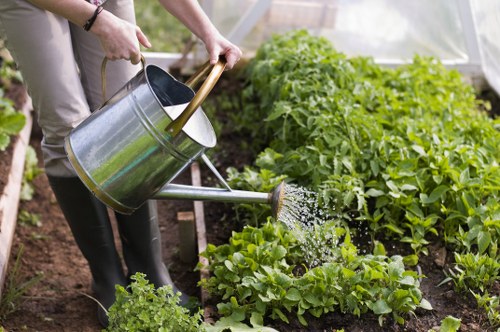 In practice, a sustainable rubbish gardening area is built through consistent actions: timely collections, clean separation of streams, community redistribution and robust partnerships. Eco-friendly lawn mowing New Cross means crews who understand which loads go to civic amenity sites, where chipped wood will be turned into path mulch, and how compostable waste reaches community gardens. We avoid landfill for organic material and favour reuse or high-quality recycling whenever possible.
How residents and neighbours can support this vision: follow local separation guidance provided by borough councils, keep garden waste free of plastic and heavy soil, and support collection windows to reduce contamination. By aligning household efforts with professional green maintenance, the entire New Cross area benefits from healthier soils, increased biodiversity and lower emissions. Together — councils, charities, residents and service providers — we make sustainable lawn care not just feasible but routine.